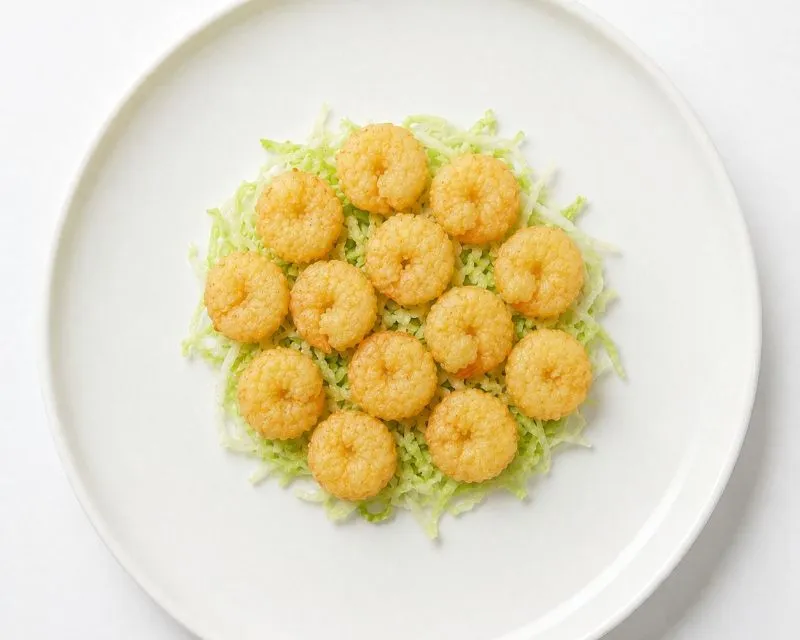
Ebi Tempura
海老天 · ebiten
Everything a tempura master knows fits inside a single contradiction: the batter must be ice-cold, the oil must be boiling. The instant they meet, the batter seizes, and a shell as fine as lace sets around the fish. Overmixing is forbidden; the surviving lumps of flour belong to the texture. Old masters judge the oil not with a thermometer but by the sound of a single drop of batter falling in.
That knowledge was cooked on the streets of Edo. In the seventeenth century, the city that is now Tokyo was among the most crowded in the world, much of it single working men. What fed them was the street stall: sushi, soba, tempura. Shrimp lifted from the bay at dawn turned gold in boiling oil by evening and traveled hand to hand on bamboo skewers. There were even periods when frying tempura indoors was banned for fear of fire; this dish grew up, quite literally, in the open air.
Ebi 海老 means shrimp; the kanji read as the old man of the sea. With its bent back and long whiskers, the shrimp stands for long life in Japanese culture.
We carry it from counter to table in a few steps, because tempura lives exactly as long as its crunch.