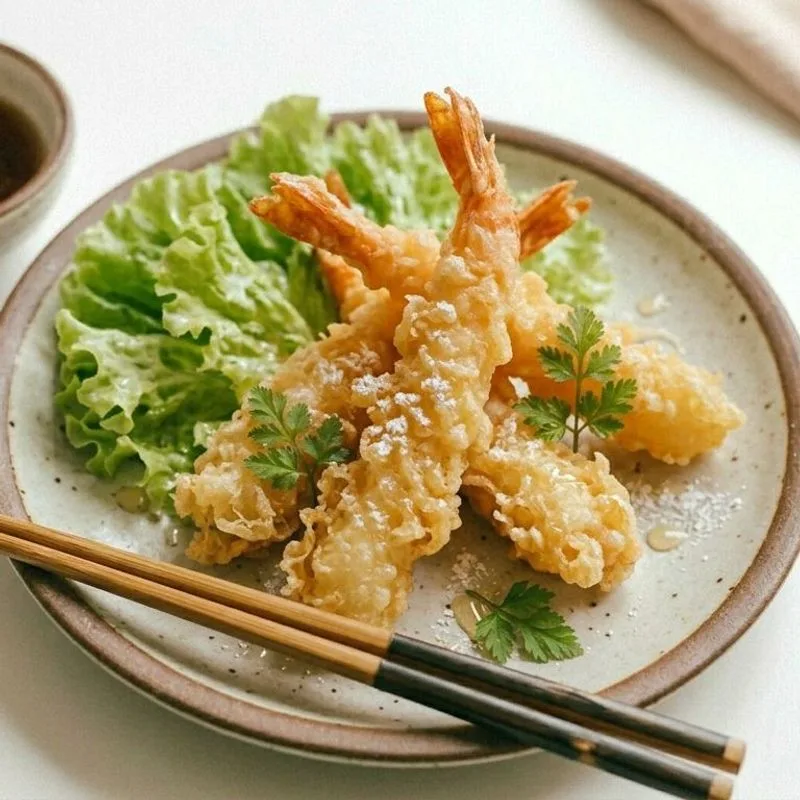
Jumbo Ebi Tempura
海老の天ぷら · ebi no tenpura
- Fried jumbo shrimp
- Truffle mayonnaise
- Spicy mayonnaise
- Iceberg lettuce
- Cherry tomatoes
In 1543, a storm-blown Portuguese ship drifted onto the island of Tanegashima at Japan’s southern edge, and two worlds met face to face for the first time. With the ships came traders, missionaries, and their kitchen habits. In the Catholic calendar, the meatless seasons were called quatuor tempora; on those days the Portuguese fried flour-coated fish and vegetables, naming the practice with that Latin phrase. The Japanese took the word for the name of the dish. Tempura 天ぷら is the child of a misunderstanding.
But Japan’s habit of refining whatever it borrows went to work here too. The batter grew thin, mixed only briefly with egg and ice-cold water; lumps were counted as texture, not flaw. At the street stalls of Edo, tempura became one with the shrimp of the bay, a standing-up street food eaten from bamboo skewers.
A rumor keeps the dish company: the death of Tokugawa Ieyasu in 1616, the shogun who unified Japan, has always been blamed in popular telling on a fashionable new dish of sea-bream tempura. Historians now point elsewhere; but the legend survives, like a compliment written to tempura’s irresistibility.
Our jumbo prawns are the most theatrical performance of this four-hundred-year-old technique: plump, sweet flesh under a golden armor as fine as lace.