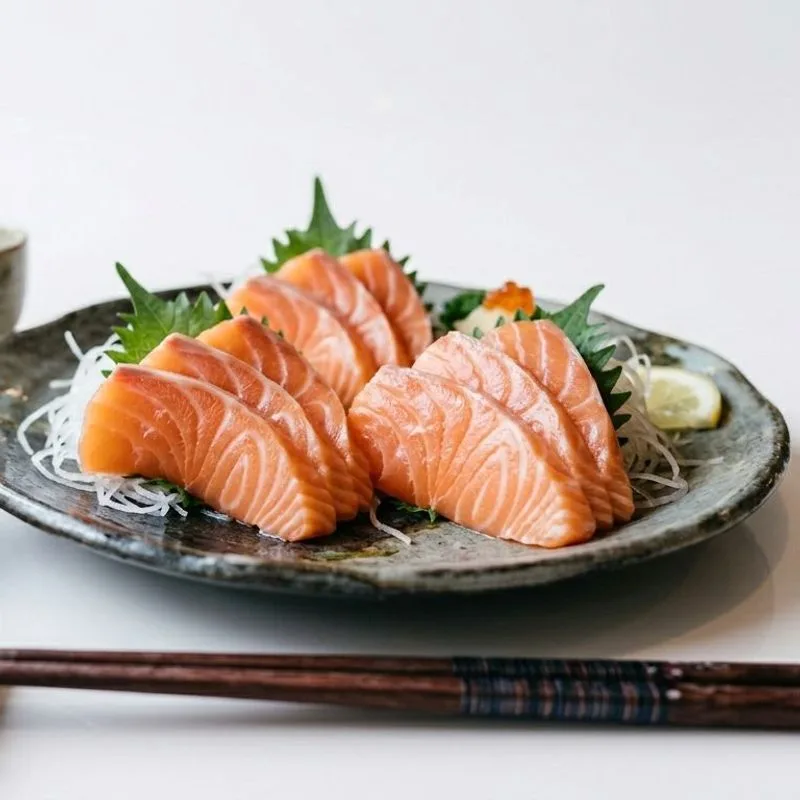
Sake Sashimi
鮭の刺身 · sake no sashimi
- Salmon
- Iceberg lettuce
- Lemon
Salmon, today the world’s best-loved sashimi, has a surprisingly short past at the sushi counter. The Japanese have known the fish for centuries; its kanji is 鮭, its table name sake or shake. But they always ate it cooked. The reason was not refinement but necessity: salmon caught in the Pacific could carry parasites, and eating it raw was unsafe.
The change came from Norway. In 1985 the Norwegians launched a long campaign they called Project Japan, with one goal: to win a place at the Japanese sushi counter for fjord-farmed salmon, free of parasites. Bjørn Eirik Olsen, one of the men behind it, would recall years later that persuading Tokyo’s conservative masters was like selling warmth to a frozen market. The break came in 1992, when a major Japanese food company bought five thousand tons of salmon on a single condition: it could be sold only as sushi.
The rest is familiar history. The homeland of sushi accepted one of its most iconic bites from the far end of the seas.
The slices of orange silk on your plate carry that story. Inside sashimi’s naked honesty, salmon has only one thing to defend itself with: its freshness. To our mind, there is no stronger defense.