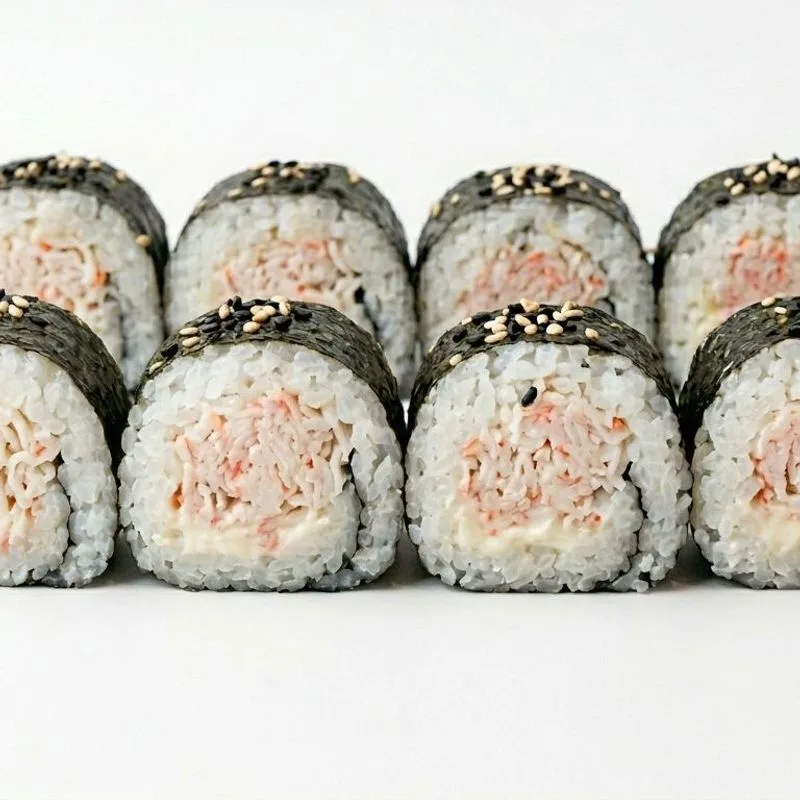
Kani Maki
蟹巻き · kani maki
- Crab
When Japan’s calendar turns to winter, the fish markets take on another kind of excitement: crab season has opened. For the snow crabs of the northern seas the country all but declares a holiday; crab excursions run to Hokkaido, and kani 蟹 takes the head seat at winter tables. That single syllable is one of the most appetizing words of the Japanese winter.
To carry the crab’s sweet, fibrous flesh into every season and onto every table, Japanese food craft built its own bridge: kani shaped patiently from surimi, the refined white-fish paste, toward the crab’s texture and sweetness. That translation, found by accident at a factory in Ishikawa in 1972, reached every counter in the world within half a century.
Kani maki is that winter festival in its everyday, approachable form: sweet fibers, cool rice, crisp nori. An unshowy roll; but behind it stand a whole winter sea and a centuries-old appetite for it.
Eight slices of winter cheer on a Mediterranean shore. Let the seasons mingle; no one here objects.