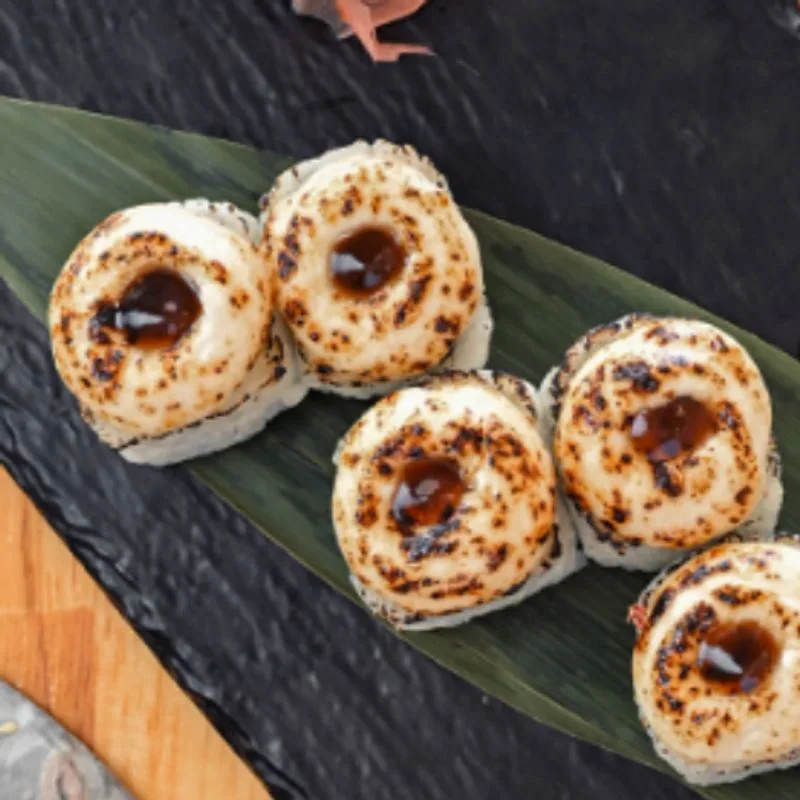
Hot Signature Kani
カニカマ · kanikama
- Crab
- Cream cheese
- Cucumber
- Avocado
- Unagi sauce
- Hot sauce
Behind kani stands one of the friendliest accidents in food history. In 1972, in the city of Nanao in Japan’s Ishikawa prefecture, a food company named Sugiyo was trying to develop artificial jellyfish from kelp alginate. The experiment failed; but the researchers noticed that fish paste, rolled thin and tinted, had a texture astonishingly close to crab leg. The jellyfish they sought was never found; what they found instead traveled the world. Kanikama カニカマ was born.
Its foundation, surimi, the refined paste of white fish, continues the kamaboko tradition known in Japan for centuries. The white flesh is washed and purified again and again, then shaped toward the crab’s sweetness and fibrous grain. The aim is not deception but translation: carrying the crab’s character into a more approachable language.
In the Hot Signature reading, those sweet fibers are taken inside a hot, crisp shell; the heat pushes the sweetness forward, and the strands come apart softly.
An experiment gone wrong, arriving fifty years later on a plate in Antalya: this, too, is what we call cooking.